

 EN
EN
Kaixin, isang high-tech na enterprise na dalubhasa sa R&D, produksyon at pagbebenta ng polymer pipeline valves.
Chlorinated Polyvinyl Chloride Pipes: What the Extra Chlorine Actually Buys
A nickel-plating line circulates its bath at 58 °C. Standard PVC pipe loses strength and creeps at that temperature; the same line in CPVC runs quietly for years. One element — chlorine — explains the gap, and knowing precisely what it buys, and what it cannot fix, is the whole craft of specifying chlorinated polyvinyl chloride pipes.
The short version: specify CPVC pipe when service temperature pushes past roughly 60 °C or when hot alkaline and hypochlorite chemistry is on the line; stay with PVC-U below that ceiling; step up to PVDF or PPH when solvents, aromatics, or sustained temperatures in the high nineties enter the conversation.
Applying that conclusion early is where the money is saved. A pipe rated at 23 °C in the catalog will not deliver catalog pressure at process temperature, and the shortfall usually shows up at the joints first. Below: how chlorination changes the polymer, how CPVC and PVC differ in numbers rather than adjectives, how ratings derate with heat, which standards belong in the specification, and what a buyer should verify before signing.
How Chlorination Changes PVC
CPVC is not a new polymer family — it is PVC that has been post-chlorinated. Producers suspend PVC resin in water or pass it through a fluidized bed, then introduce chlorine with ultraviolet light initiating a free-radical reaction along the chain. Chlorine content climbs from about 57 percent in standard PVC to between 63 and 69 percent, and that single compositional shift raises the heat deflection temperature by roughly 25 to 35 °C.
Everything else follows from process control. Base-resin molecular weight, uniformity of chlorination, and the additive package of stabilizers, impact modifiers, and pigments decide how the compound extrudes — and how it behaves after ten years of hot service. Two CPVC pipes with identical dimensions can therefore differ measurably in long-term hydrostatic strength: same chemistry family, not the same compound.
CPVC Versus PVC: the Numbers That Matter
Product sheets reduce the difference to "better heat resistance" — true but incomplete. The comparison worth having at the drawing board:
| Property | PVC-U | CPVC |
|---|---|---|
| Chlorine content | About 57% | 63–69% |
| Maximum continuous service temperature | About 60 °C | About 90 °C, grade-dependent |
| Heat deflection temperature | Baseline | Roughly 25–35 °C higher |
| Pressure capacity when hot | Falls steeply above 40 °C | Retains more, still derated |
| Solvent cement | PVC cement | CPVC cement only, to ASTM F493 |
| Fire behavior | Self-extinguishing | Self-extinguishing, higher oxygen index |
| Relative material cost | Baseline | Moderately higher |
Two consequences deserve emphasis. Cement is not interchangeable: CPVC bonds only with CPVC-specific cement to ASTM F493, never general PVC cement. And both materials dislike the same chemical families — aromatics, chlorinated solvents, ketones — so the upgrade buys temperature headroom, not chemical immunity. For a plain-language walkthrough, see our note on the CPVC and PVC difference.
The Rating You Buy Is Not the Rating You Get
Every catalog pressure figure for thermoplastic pipe is established at 20 to 23 °C, and process lines rarely live there. As temperature rises, allowable pressure falls; CPVC simply falls more slowly and keeps usable strength where PVC has effectively retired.
| Fluid temperature | Typical derating factor | Effect on a PN10 catalog rating |
|---|---|---|
| 20 °C | 1.00 | Full rating available |
| 40 °C | About 0.80 | Roughly PN8 |
| 50 °C | About 0.65 | Roughly PN6.5 |
| 60 °C | About 0.50 | Roughly PN5 |
| 70 °C | About 0.40 | Roughly PN4 |
| 80 °C | About 0.25 | Roughly PN2.5 |
A pressure rating is a promise made at 23 °C. Whether the promise holds is decided by your process temperature.
Read it the way a specifier would: a line cataloged at PN10 delivers roughly PN5 at 60 °C. If the loop runs at 65 °C with surge pressure on top, the correct responses are a heavier wall class, a larger diameter to cut velocity, or a different material — not optimism.
Standards and Dimensions Worth Writing Down
The references that matter in industrial service: ASTM F441 with F439 for Schedule 40 and 80 pipe and fittings, ASTM F493 for solvent cement, ASTM D2846 for plumbing-grade hot and cold water, DIN 8080 in European practice, and China's GB/T 18998 series for industrial CPVC piping systems. Naming the standard in the specification fixes wall thickness and dimensions, and gives the inspector an objective acceptance basis instead of a brochure claim.
Dimensionally, industrial CPVC runs from small dosing lines to large headers, and pipe, fittings, and flanges in DN15 through DN600 cover most chemical and electroplating duties. For plants built to Chinese GB standards, an industrial CPVC pipe range across those sizes is the backbone of hot corrosive transfer and circulation:
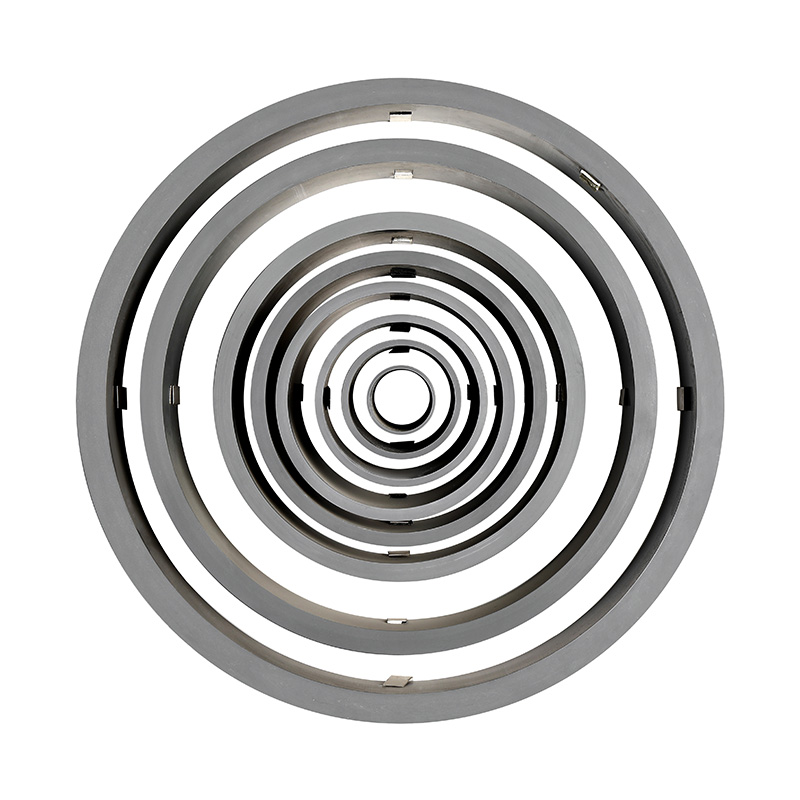 Industrial CPVC Pipe DN15-DN600 to GB Standard Covering small dosing lines up to large headers, this GB-standard CPVC pipe range forms the backbone of hot corrosive transfer lines, keeping pipe, fittings, and flanges dimensionally consistent across chemical and electroplating duties. View Product →
 Info: keep the standard family consistent end to end. A GB-dimensioned flange bolted to an ANSI-drilled valve means mismatched bolt patterns — an expensive discovery at installation rather than at ordering.
Where CPVC Pipes Earn Their Keep
- Electroplating: circulation of nickel, chrome, and acid zinc baths, typically run at 50–65 °C — squarely past PVC's comfort zone.
- Chemical processing: hot dilute acids, alkaline scrubber liquors, sodium hypochlorite, and chlorinated water service.
- Environmental systems: hot corrosive effluent, scrubber circulation, and dosing skids in wastewater plants.
- Hot water and sprinklers: plumbing-grade CPVC is the default thermoplastic for hot distribution and listed fire sprinkler systems.
Success pattern: a plating shop that swaps failed PVC headers on 58 °C nickel-bath circulation for SCH 80 CPVC trades a modest premium for joints that stop weeping — usually recovered in the first avoided shutdown.
Danger — where CPVC is the wrong answer: aromatics such as benzene and toluene, chlorinated solvents such as methylene chloride, ketones such as acetone, and any steam or hot-oil duty. For those streams, PVDF or PPH is the correct conversation; forcing CPVC to cope is how lines get replaced quarterly.
Installation: Joints, Expansion, and Support
Solvent-cement joints
CPVC joins with solvent cement: CPVC-grade cement to ASTM F493, primer where called for, surfaces cleaned and never cemented over an old dry-fit. Respect the cure time before pressurizing, and on large diameters apply cement generously to both faces with a full push and a quarter twist — a starved joint on DN150 announces itself during commissioning.
Warning: the most common field failure is PVC cement used on CPVC "because the pipe fit." The joint passes a cold water test on Friday and lets go on the first hot cycle.
Demountable joints
Where lines meet tanks, pumps, or equipment that needs service access, flanges are the pragmatic choice. A van stone flange lets the plastic ring rotate for bolt-hole alignment against GB, ANSI, or JIS drilling, which saves real hours during assembly:
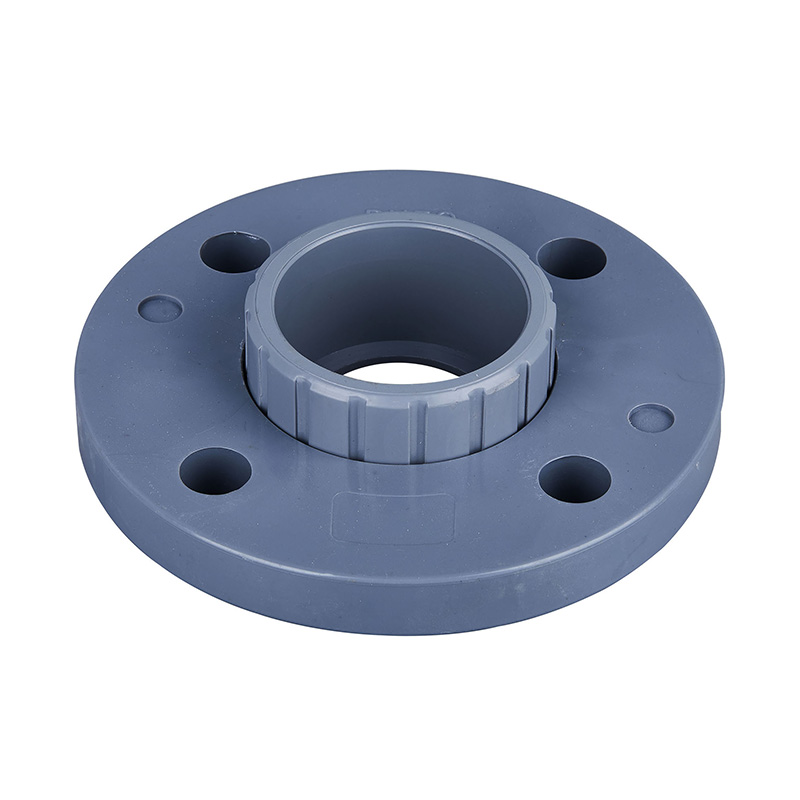 CPVC Slip-on Van Stone Flange DN15-DN500 GB Standard A van stone flange lets the plastic ring rotate for bolt-hole alignment against GB, ANSI, or JIS drilling, making serviceable connections to tanks, pumps, and equipment while staying within the same CPVC material family. View Product →
 Expansion and support
CPVC expands at roughly 0.06 mm per meter per degree Celsius, so a 30-meter straight run warming by 30 °C grows about 55 mm. Loops, offsets, and direction changes absorb that growth by design — never rigid clips that lock the line solid. Support spacing follows the manufacturer's tables, and the spans shrink as temperature climbs: a hanger grid correct for 20 °C water can allow visible sag at 60 °C.
Not All CPVC Is the Same: the Buyer's Checklist
CPVC names a family of compounds, not a single recipe. Chlorine content and its uniformity, base-resin molecular weight, and filler loading all move the long-term strength of finished pipe; two tubes with the same dimensions can differ in hydrostatic design basis enough to matter at your operating point. A manufacturer that extrudes pipe, molds fittings, and machines valves in one plant keeps the material family aligned across the system — Kaixin Pipeline Technologies, for example, produces CPVC pipe, fittings, and valves to GB, ANSI/ASTM, and JIS standards. Whichever supplier you choose, ask for the same evidence:
- Compound chlorine content, with batch traceability.
- Hydrostatic test reports at your operating temperature, not only at 20 °C.
- Standard compliance stated on the certificate — ASTM F441, GB/T 18998, or the JIS equivalent.
- Fittings and valves in the same material and standard across the full size range.
- A stated outdoor policy: CPVC should be painted, wrapped, or insulated against UV.
The System View: Pipe Is One Part of the Loop
A hot corrosive loop is only as strong as its weakest component, and that component is rarely the straight pipe. Valves, sight glasses, level indicators, and the pump share the same temperature and chemistry, so keeping them in one material family simplifies cement compatibility, gasket choice, and spare-parts inventory. For flow control on plating and chemical circulation lines, a CPVC butterfly valve in a single pattern covers DN15 through DN200:
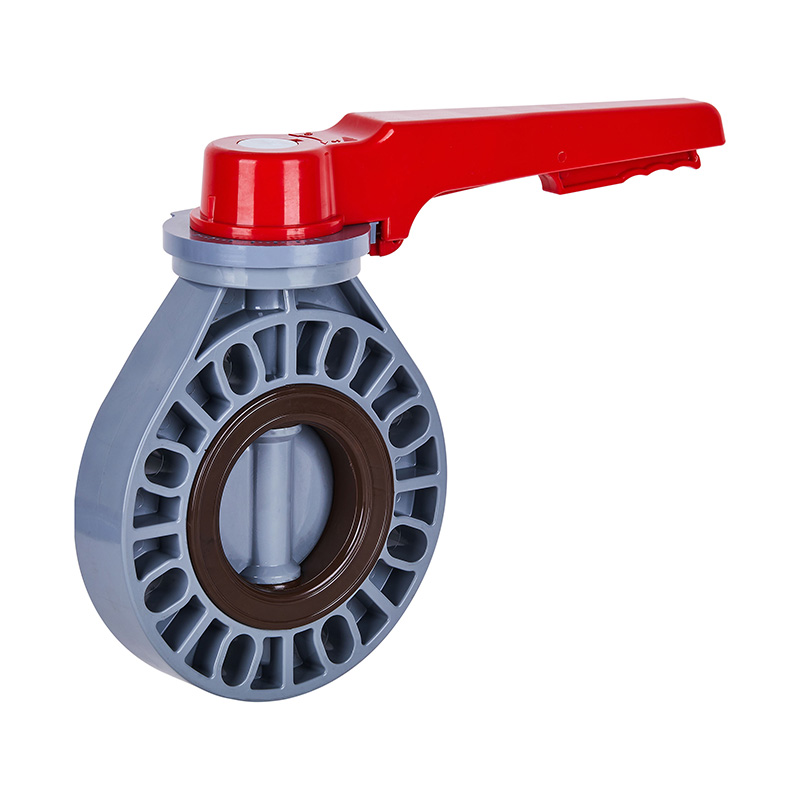 CPVC D71X-10V Lever Butterfly Valve DN15-DN200 GB Standard A flanged lever-operated CPVC butterfly valve rated to 10 bar and -20 to 95 °C, offering flow control on plating and chemical circulation lines in the same material family as the surrounding pipe and fittings. View Product →
 Downstream, corrosion-resistant plastic centrifugal and self-priming pumps close the loop for bath circulation and transfer, so pipe, valve, and pump walls age at the same rate instead of one component dictating the shutdown schedule for everything else.
Specify the Ceiling, Not the Brochure
Chlorinated polyvinyl chloride pipes earn their place with one honest trade: a modest premium over PVC in exchange for roughly 30 °C more service temperature, better manners in hot hypochlorite and alkaline service, and joints that stay tight where PVC has already surrendered. The premium is well spent only when three checks are made — the derated pressure at your real operating temperature, chemical compatibility across every component in the loop, and compound consistency from pipe to fitting to valve.
Get those three right and CPVC is what a good pipe system should be: quiet, boring, and untouched until the next planned shutdown. Get them wrong and no catalog figure will rescue the commissioning date. Specify the ceiling your process actually runs at, then buy the material that clears it with margin.

 Punong-tanggapan: No. 539 Bohai Road, Beilun District, Ningbo City, Zhejiang Province, P.R. China
 +86-18067123177